What Are The Warning Signs Of A Chimney Fire?
Knowing what are the warning signs of a chimney fire is one of the most critical pieces of information for any homeowner with a fireplace or wood stove. These events can be surprisingly quiet and go unnoticed, or they can be loud, destructive, and terrifying. Consequently, understanding the subtle and overt clues can empower you to act quickly, protecting your property and, most importantly, your family. This guide details the key indicators you must not ignore.
Visible and Audible Clues: The Immediate Dangers
Some chimney fires announce themselves dramatically, while others offer more subtle hints. Therefore, it’s essential to be aware of the full spectrum of signals. If you are using your fireplace, paying attention to new or unusual sights and sounds is your first line of defense.
Specifically, you should be on alert for any of the following indicators:
- Loud Cracking or Popping Noises: An unusually loud and persistent cracking sound from the chimney is a common sign. This is different from the normal sound of burning wood.
- A Low Rumbling Sound: Many homeowners describe a sound like a low-flying airplane or a rumbling train. This is often the sound of air being rapidly drawn into the flue to feed the fire.
- Dense, Dark Smoke: A large volume of dark, dense smoke exiting the top of your chimney is a major red flag. Similarly, smoke filling your home is an undeniable emergency.
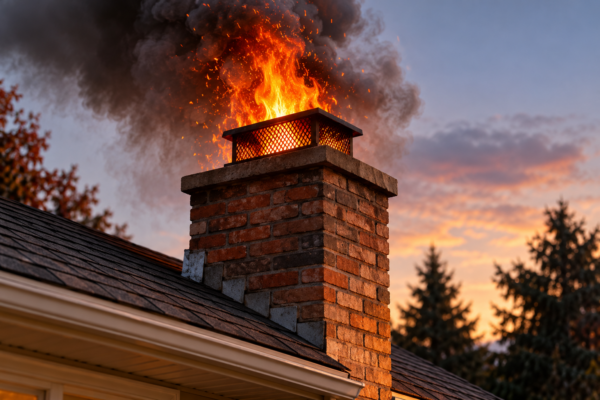
- Flames or Burning Debris Erupting from the Chimney Top: This is the most dramatic and obvious sign of a chimney fire, often looking like a fireworks display.
Furthermore, you might notice an intense, hot smell. If you observe any of these signs, you must assume you have an active chimney fire and act immediately.
Understanding the Root Cause: Creosote Buildup
To prevent a fire, you must first understand its cause. The primary culprit behind virtually all chimney fires is creosote. When you burn wood, the smoke contains unburned byproducts that travel up the chimney. As this smoke cools, these byproducts condense on the cooler inner walls of the flue, forming a substance called creosote.
Importantly, creosote is highly flammable. Over time, it can build up into a thick, tar-like layer. This dangerous creosote buildup provides the perfect fuel for a fire. All it takes is a high internal flue temperature or a stray spark to ignite this layer, turning your chimney into an inferno. As a result, managing creosote is the single most important aspect of chimney fire prevention.
What Should You Do If You Suspect a Chimney Fire?
If you believe a chimney fire is happening, your response must be immediate and methodical. Panic can lead to dangerous mistakes. Follow these steps in order:
- Evacuate Everyone: Get every person and pet out of the house immediately. Do not stop to gather personal belongings.
- Call 911: Once you are safely outside, call the fire department. Report a chimney fire, giving your address clearly.
- Close the Damper (Only if Safe): If you can do so safely without risk of burns, closing the fireplace damper or stove air inlets can help cut off the oxygen supply to the fire. However, do not risk your safety to do this.
- Monitor from a Safe Distance: Move to a safe location away from the house, such as across the street, and wait for emergency services to arrive. Do not re-enter the home for any reason.
Preventative Measures: How to Avoid a Chimney Fire
The best way to handle a chimney fire is to prevent it from ever happening. Proactive maintenance is not just a suggestion; it is a necessity for safe fireplace operation. These preventative steps are your most powerful tools against a potential disaster.
Why Regular Inspections Answer ‘What Are the Warning Signs of a Chimney Fire?’
A professional inspection is the most effective way to identify risks before they escalate. During a professional chimney inspection, a certified technician will assess the level of creosote buildup, check for cracks in the flue liner, and ensure the entire system is structurally sound. This process proactively identifies the conditions that lead to a fire, effectively answering the question of what are the warning signs of a chimney fire by finding them in their earliest stages. For example, an inspector can tell you if your creosote levels are hazardous long before they have a chance to ignite.
Additionally, knowing how often your chimney needs sweeping is crucial. The National Fire Protection Association (NFPA) states that chimneys, fireplaces, and vents shall be inspected at least once a year. This annual checkup is the minimum standard for safety. Consequently, scheduling regular professional chimney cleaning removes the flammable creosote, which is the most direct action you can take to prevent a fire. Finally, burning only dry, seasoned hardwood produces less smoke and, therefore, less creosote than burning green or soft woods.
Key Takeaways for Homeowner Safety
Ultimately, the responsibility for a safe fireplace experience rests with the homeowner. Recognizing the audible and visible clues of an active fire is vital for immediate safety. However, the most important takeaway is that prevention is paramount. You can avoid ever having to worry about these dangers by committing to a routine of annual inspections and cleanings.
By understanding the risks of creosote and taking proactive steps, you are addressing the core issue. Never ignore the potential dangers lurking in an unmaintained chimney. Being able to spot what are the warning signs of a chimney fire is a good skill, but having a professionally maintained chimney that never produces them is even better. Protect your home and family by scheduling a professional chimney service today.